Find it.
Spot everyday litter
against the ground.
Outdoor cleanup. In development.
We're building a robot
to put it there.
A wrapper at the curb. A cup beside the path. Someone has to come back for every piece.
We want keeping a place clean to take less of someone's day.
More hands help.
So could a robot.
A pair of small collectors and a soft feed roller guide litter onto a conveyor and into a belly bin. The mechanism stays close to the ground, where the work is.
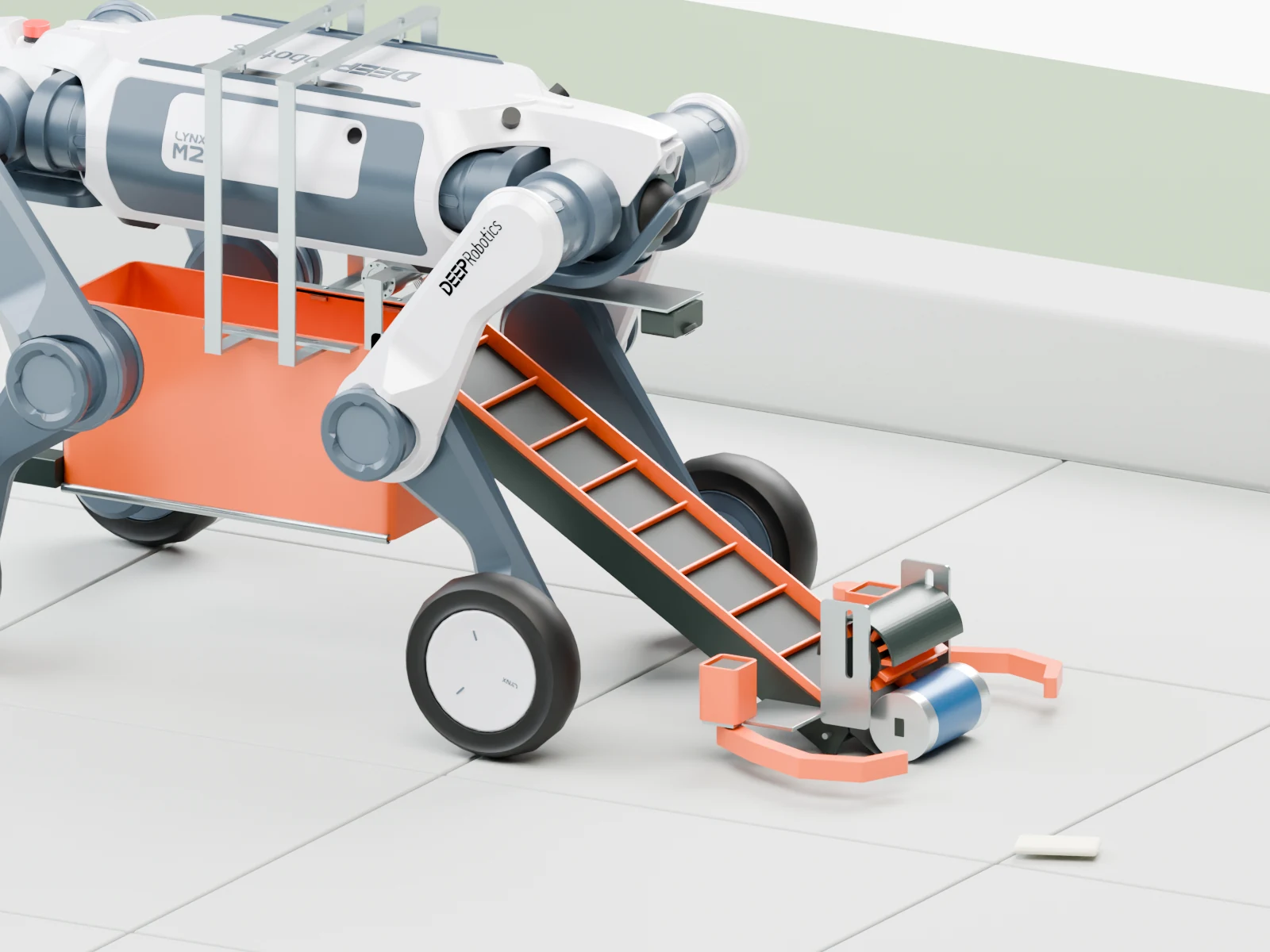
The loop we're building
One piece at a time.
Then the next one.
Spot everyday litter
against the ground.
Gather it gently.
Feed it into the bin.
Return to the dock.
Empty. Charge. Head back out.
A robot should make cleanup easier from start to finish. These are the capabilities we're building toward.
Return to a dock when power runs low. Recharge for the next route.
Transfer collected litter into a larger bin at the dock.
Work through an assigned area and return to the places that need care.
Slow movement. Guarded mechanisms. Stop for people, animals and uncertainty.
Start with one reliable pickup.
Build toward a route that stays clean.
Build the collectors, conveyor, belly bin and dock around one complete cleanup loop.
Test the transfer from ground to bin with real litter, uneven surfaces and jams.
Prove safe navigation, automatic charging and emptying on a repeat route.
Blazer is in development. The animation illustrates the intended motion. Reliable pickup, field performance and the autonomous dock cycle still need to be proven.